The Colonial Brontës
4 February 2026 - 1 January 2027
Exhibition is included with admission
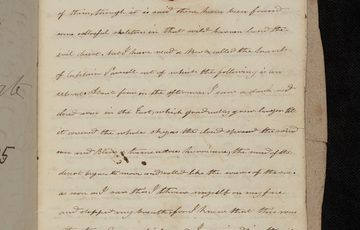
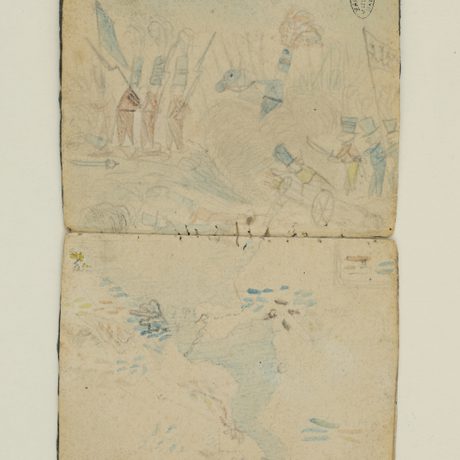
The Brontë children were avid readers of books, periodicals and newspapers depicting British colonial activity and missionary work. Fascinated by accounts of exploration, conquest and intercultural encounter, they invented their own colonies collectively called the Glass Town Federation. Using miniature handwriting - supposedly produced by their twelve toy soldiers – the siblings wrote poems, sagas and magazines which drew extensively from their colonial reading material, fictionalising real-life territorial battles, British military figures and Asante warriors.
CONTENT WARNING: This page includes excerpts from written works containing outdated terminology.
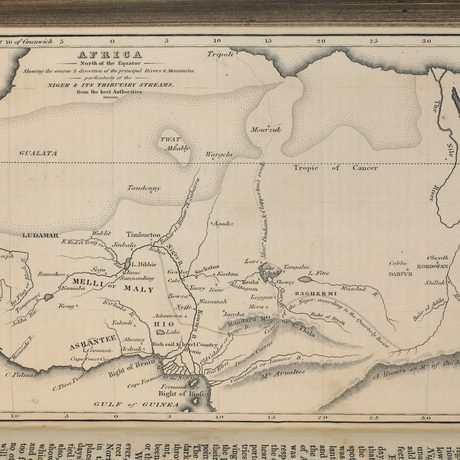
West Africa might seem a world away from the West Yorkshire moors. However, the region was often in the news when the Brontë children were growing up - particularly after 1823, when Britain went to war with the powerful Asante Empire.
The Asante Empire (then spelled ‘Ashantee’) dominated the territory of modern-day Ghana. During the seventeenth and eighteenth centuries, Britain had established forts along the Gold Coast to trade enslaved Africans alongside goods like gold and rubber. After the British government abolished the slave trade in 1807, British merchants sought alternative commercial opportunities in the region. Expeditions were sent out to map the terrain, identify trade routes and locate natural resources. This caused tensions with Asante, culminating in the outbreak of the First Anglo-Asante War in 1823.
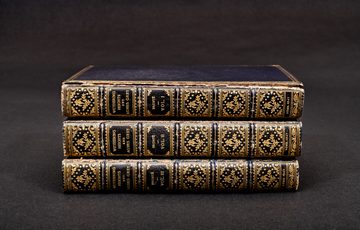
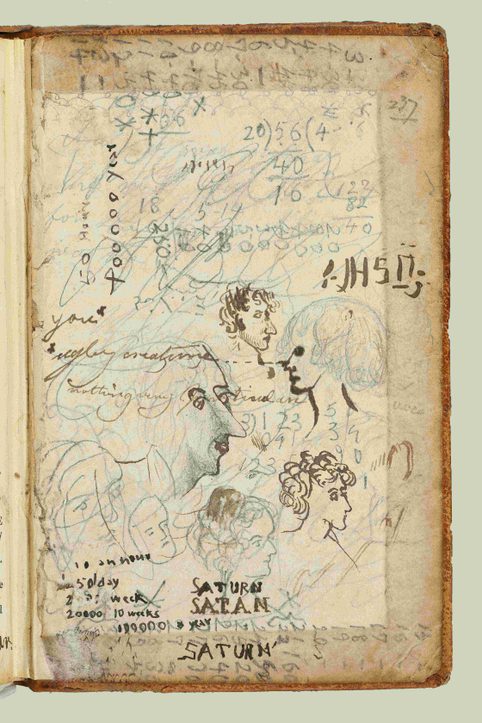
The young Brontës were taught geography by their father, Patrick. Educational textbooks like Goldsmith’s would have told them much about Africa, though the information was presented from a British colonial perspective. The young Brontës made extensive use of this book; the endpapers are covered with notes and doodles.
The Chief was quite black and very tall; he had a fierce countenance and the finest eyes I ever saw. We asked him what his name was, but he would not speak. We asked him the name of his country, and he said, ‘Ashantee’…’
Charlotte Brontë, 'Two Romantic Tales,' 1829

The origins of the Brontës’ extraordinary imaginary world date back to 1826, when Charlotte was ten, Branwell nine, Emily eight and Anne six. This was the year in which Patrick Brontë bought Branwell a set of toy soldiers, which were adopted by each of the children and given names and characters.
The Brontës created an imaginary land based on descriptions of the interior of Africa, and with a capital city called Glass Town (later evolving to become Verdopolis). The kingdom was divided into a confederacy, influenced by their reading of The Arabian Nights.
Many real-life individuals are fictionalised in the Brontë juvenilia, including the Duke of Wellington and his sons. During his early career in India, the real Duke of Wellington had left money for a toddler called Salabat Khan, the son of an Indian rebel who had been killed by his East India Company troops. Charlotte adapted this story for the world of Glass Town, renaming the orphan Quashia Quamina, and reimagining him as the son of a slain Asante king. She imagined Quashia being adopted into the duke’s family, prompting tensions with his biological children.
"I declare he is that strange acquisition my late neighbour made, in his journey to Liverpool a little Lascar, or an American or Spanish castaway."
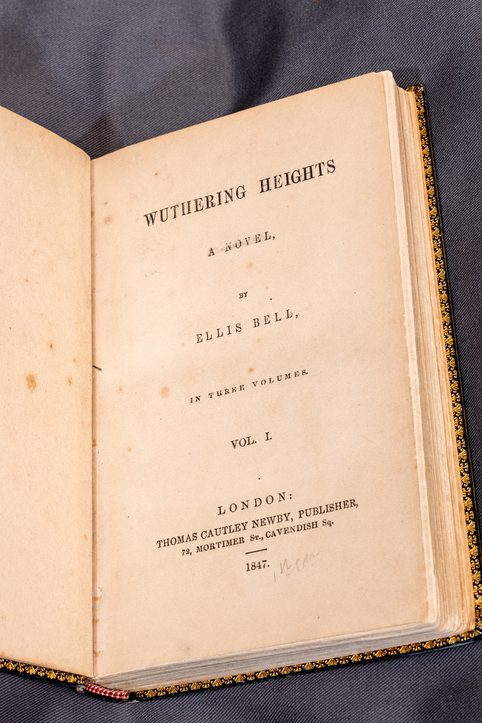
Wuthering Heights by Emily Brontë
The Brontës’ later novels were defined by the exploration of missionary and racial themes in their juvenilia. A new film adaptation of Emily Brontë’s Wuthering Heights has resurrected longstanding debates about Heathcliff’s racial identity. Whatever Heathcliff’s origins, it is certain that people of African descent lived and worked in Yorkshire between 1771 – the date Emily’s story reaches back to - and the author’s death in 1848.
The life of Thomas Place parallels Heathcliff’s story. Thomas was born in 1824 to an enslaved mother (Sherry Ellis) and White plantation owner (William Place). Thomas’s father purchased his freedom and bequeathed him land at Newton-le-Willows, North Yorkshire. Thomas travelled to Britain as a boy of nine or ten, but his father had died by the time his ship arrived.
He was met off the ship by his Yorkshire relatives and taken to a farm, where he lived for some ten years. Two years after Wuthering Heights was published in 1847, Thomas sold his land for £500. Thomas worked as a farmer, married a local woman and named one of their children Maria Ellis, in memory of his mother.
Dive deeper by listening to our podcast episode...
Exhibition Highlights