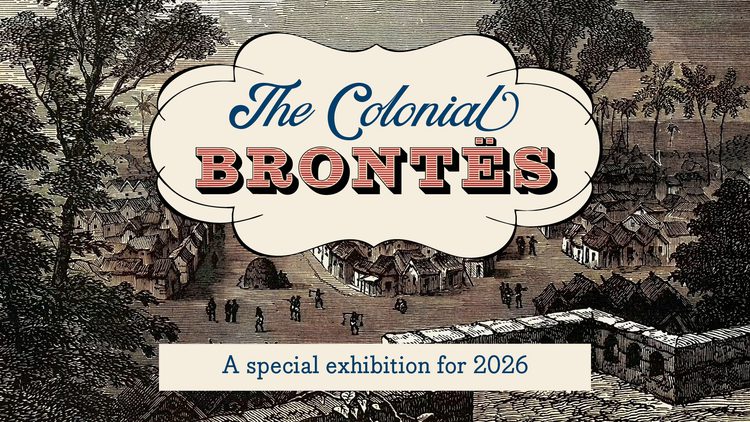
Our 2026 exhibition examines the period of exploration, conquest and intercultural encounters of the late 18th and early 19th centuries and shows the extent to which the Brontë siblings were fascinated by colonial military campaigns and British missionary activity.
The Brontë children invented their own colonies collectively called the Glass Town Federation. Using miniature handwriting - supposedly produced by their twelve toy soldiers – the siblings wrote poems, sagas and magazines which drew extensively from their colonial reading material, fictionalising real-life territorial battles, British military figures and Asante warriors. Their later novels were defined by the young Brontës’ exploration of missionary and racial themes.
Haworth was geographically remote from Britain’s colonies but Yorkshire had strong historical ties to Africa and the West Indies. A new film adaptation of Emily Brontë’s Wuthering Heights has resurrected longstanding debates about Heathcliff’s racial identity. This exhibition provides resonant historical details about people of African descent who worked in Yorkshire between 1771 – the date Emily’s story reaches back to - and the author’s death in 1848.
The Colonial Brontës is co-curated by Professor Corinne Fowler, Honorary Professor of Colonialism and Heritage at University of Leicester and author of Our Island Stories: Country Walks Through Colonial Britain.